Atomic Golf.
Paid landing,
redesigned for conversion.
Driving scalable impact by aligning UX, design systems, and ad strategy — to transform marketing performance and achieve record-breaking revenue growth.
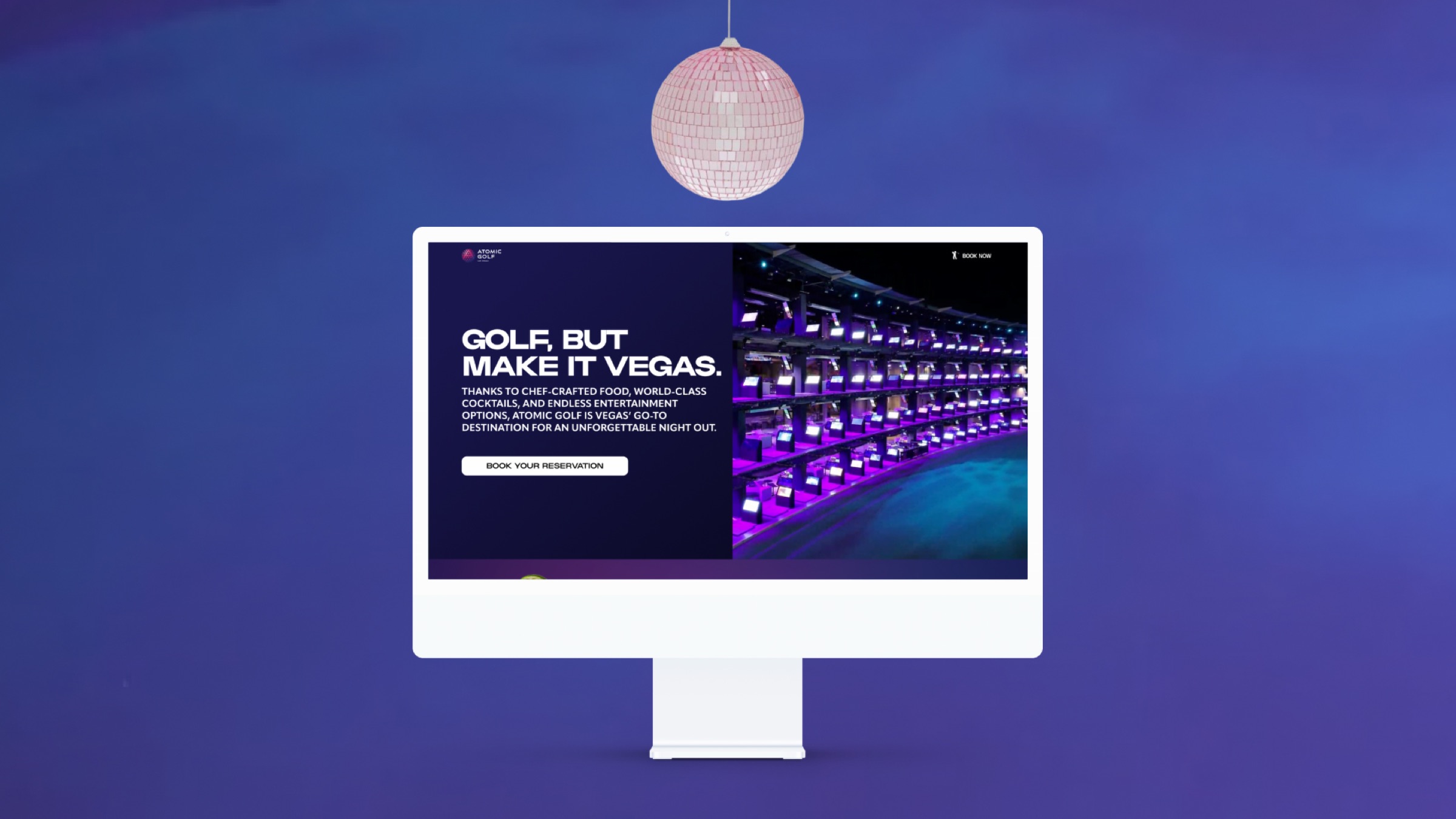
Thousands of clicks, weak conversion.
Atomic Golf is a Las Vegas–based entertainment, dining, and events venue operating in a highly competitive local and corporate events market. Paid media was scaling — but traffic was hitting a brand-focused homepage that wasn't designed for conversion or differentiated by audience intent.
I led the redesign of the paid-media landing experience — partnering with copy, paid media, and engineering to align ad-to-landing message match, reduce friction, and unlock budget efficiency at the top of the funnel.
The problem.
Atomic Golf's marketing campaigns were bringing in thousands of clicks, but all of that traffic was sent to a homepage that wasn't designed to turn visitors into customers.
The homepage focused heavily on blog content, which distracted people who were ready to book. The messaging didn't clearly match what users saw in the ads, there was no clear difference between B2B and B2C audiences, and the call-to-action buttons were hard to find. As a result, the path to booking was unclear and easy to miss.
- 01 Blog-heavy layout, low engagementThe homepage led with editorial content, pushing the booking moment well below the fold.
- 02 Weak ad-to-landing message matchWhat the ad promised wasn't what the page led with — paid traffic didn't recognize the destination.
- 03 No differentiation for B2B vs B2CCorporate events and consumer traffic landed on the same page, with the same CTAs.
- 04 CTA placement unclearThe path to a booking wasn't visible on first view — visitors had to hunt for it on any breakpoint.
- A Average scroll depth: 45%Below the booking CTA on most sessions.
- B 65% bounce rate from paid campaignsA significant share of paid traffic left within seconds.
- C Highest-performing ads emphasized experience over priceCreative selling vibe and venue beat creative selling discounts — a signal the landing page wasn't honoring.
- D Mobile traffic = 68%The majority audience, on a layout that wasn't mobile-optimized.

Average scroll depth — most sessions stopped above the booking CTA.
The path to a booking wasn't visible on first view on any breakpoint.
"If we align landing-page design and copy with high-performing ad creative, fix usability friction, and showcase value clearly — we'll improve conversion without losing brand."
Design hypothesis — discovery phase
Three lenses, one experience.
Process & execution.
Audit.
Heuristic evaluation, GA4 + Hotjar review, and a side-by-side of top-performing ad creative against the landing page it pointed to. Identified hierarchy issues and message-match gaps.
UX & design.
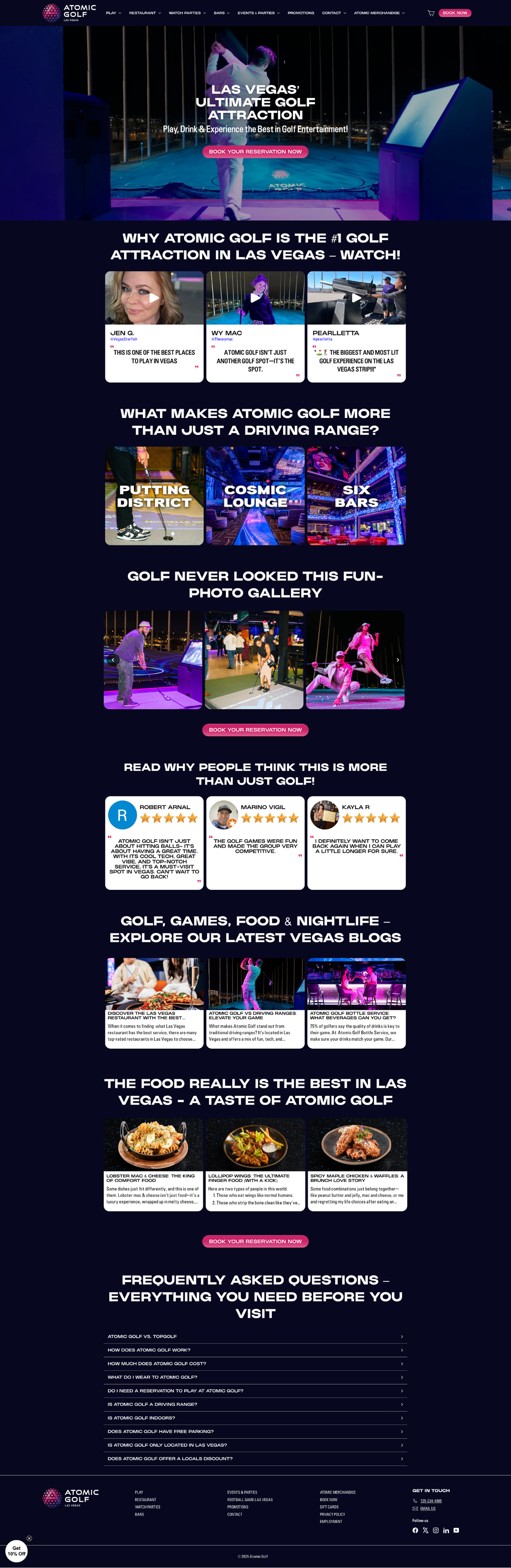
One clear path: Venue experience → Social proof → Booking. Mobile-first, with the booking CTA above the fold on every breakpoint.
QA & collaboration.
Led cross-team QA with screen-recorded walk-throughs, dev briefs, and async reviews. Issues caught before production. Shipped clean.
After.
The redesign restructured the first click. Conversion intent first, friction last — a focused experience optimized for the journey from ad to booking.
Performance impact.
Every key metric improved on the same ad budget — a 24% drop in cost per booking, 12% more bookings, and a 4.26× return on ad spend.
| Metric | Homepage | Test LP | Δ |
|---|---|---|---|
| Cost / booking | $52.49 | $39.87 | −24% |
| Bookings | 102 | 114 | +12% |
| Scroll depth | 45% | 70% | +25% |
| Bounce rate | 65% | 50% | −15% |
"After seeing the new landing page outperform the homepage by such a significant margin, we immediately shifted ad spend toward the optimized experience. The results were undeniable—four consecutive months of record-breaking quarterly revenue."
Atomic Golf — Marketing teamThe new landing page became the default template for all Google and YouTube campaigns, setting a new performance benchmark — proof that aligned message match and trust signals drive conversion efficiency at the top of the funnel.
What I'd carry forward.
Paid media doesn't fail at the click. It fails at the ten seconds after the click. Aligning the landing page to the ad — visually and verbally — turned spend that was leaking into spend that compounded.
Worked closely with.
on creative messaging, targeting, and A/B variants
on ad-to-landing message match and CTA voice
on the modular landing build and QA